
Neve Typography
In this guide, you will find information on Neve's font mechanics, including the process of modifying font types, selecting font families, adjusting font sizes, and exploring additional typography features.
These options are available in Dashboard > Appearance > Customize > Typography and are classified as follows:
The font family can be set in the General panel and applied all over the website with the possibility of choosing a different one for the heading tags.
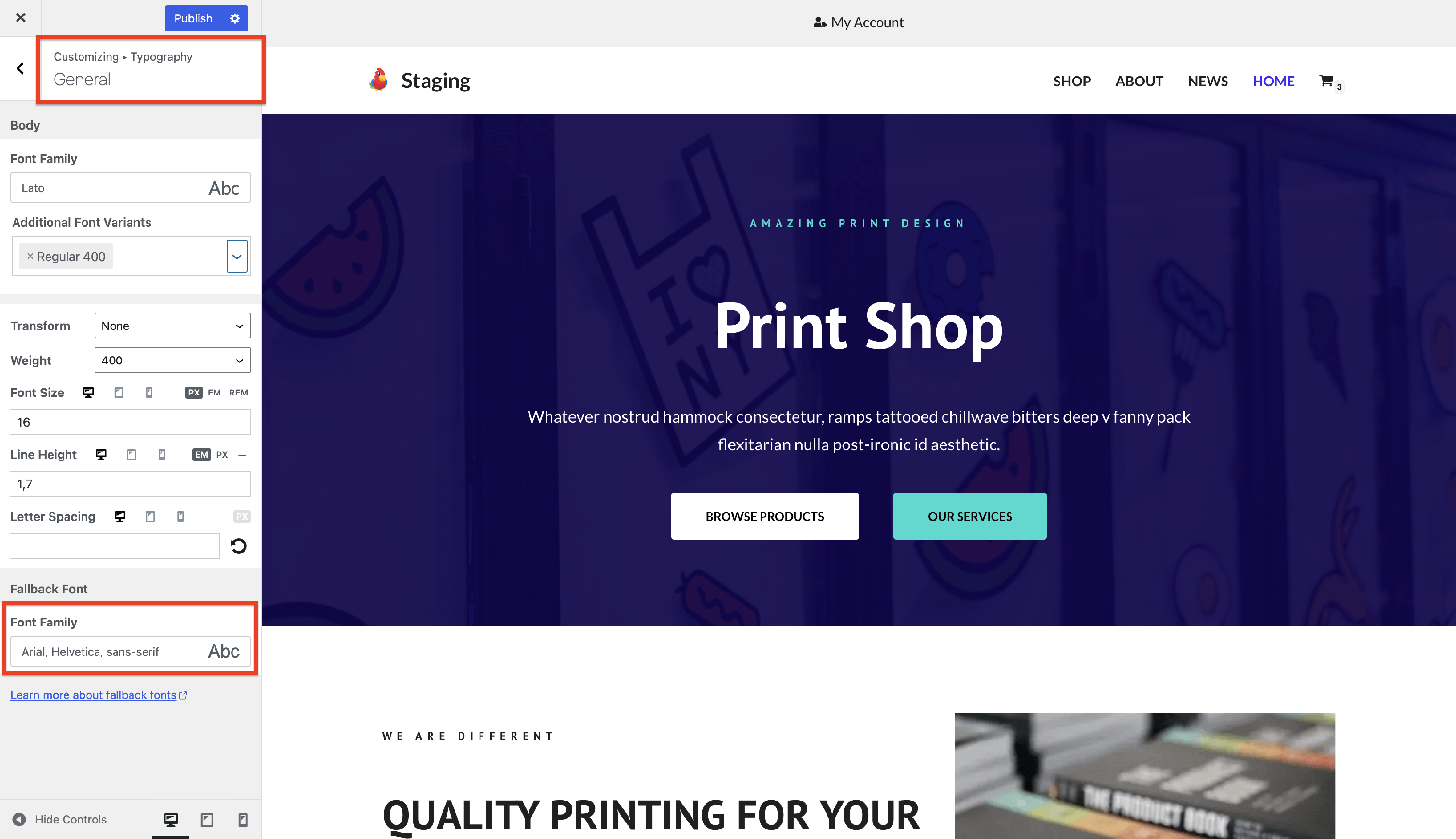
Here's a preview of how the web page will behave in the browser as it loads fonts. Initially, it will display the fallback font and subsequently load the remaining ones: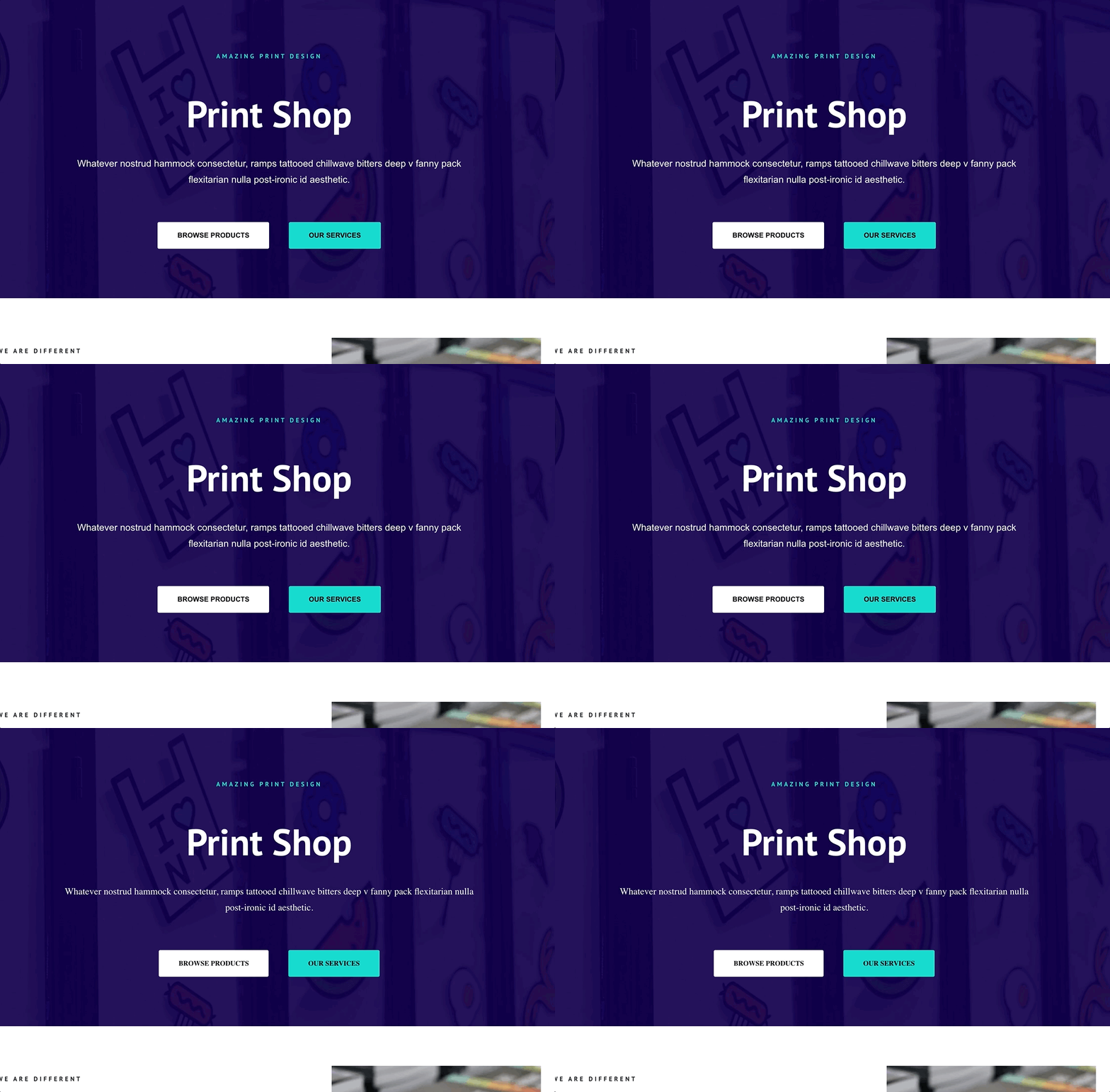
In this article
Font Presets
Opting for the most suitable fonts in combination can be difficult; therefore, Neve has incorporated an additional panel featuring font presets. This panel encompasses fonts that complement each other seamlessly. The font family, size, and weight values will be set by clicking these items.
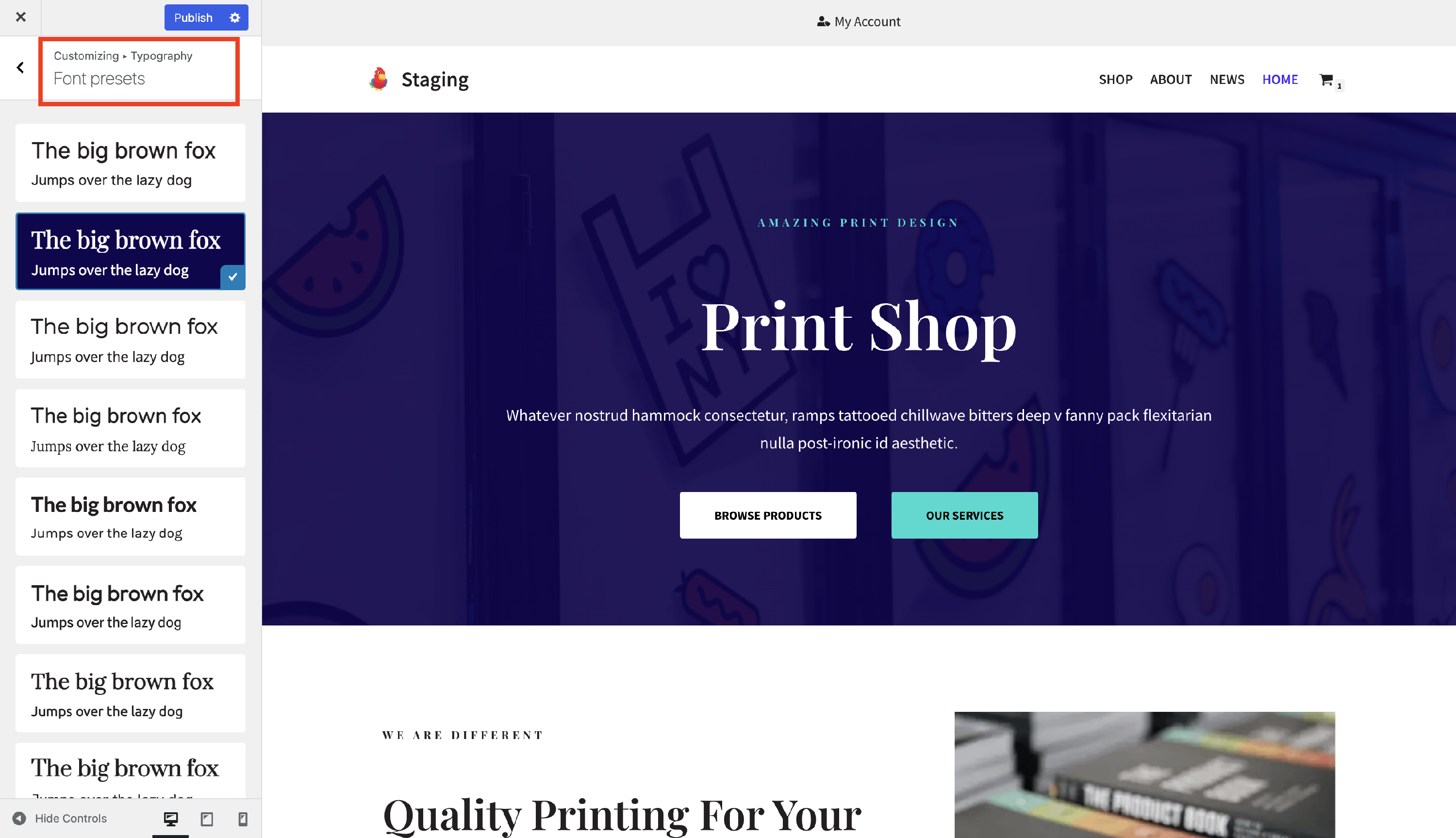
📝 Note: You can reset the changes by clicking the corresponding button.
General
The general font applies everywhere on the website, except for items where a different font is specified explicitly, as it can be for the heading tags or any block/widget.
For example, if the block used within a page has a font option, that one should override the theme, the same when using a page builder like Elementor. Most of the editors have the option to inherit fonts from the theme options.
The general font is available in Customizer > Typography > General. The following options are also available:
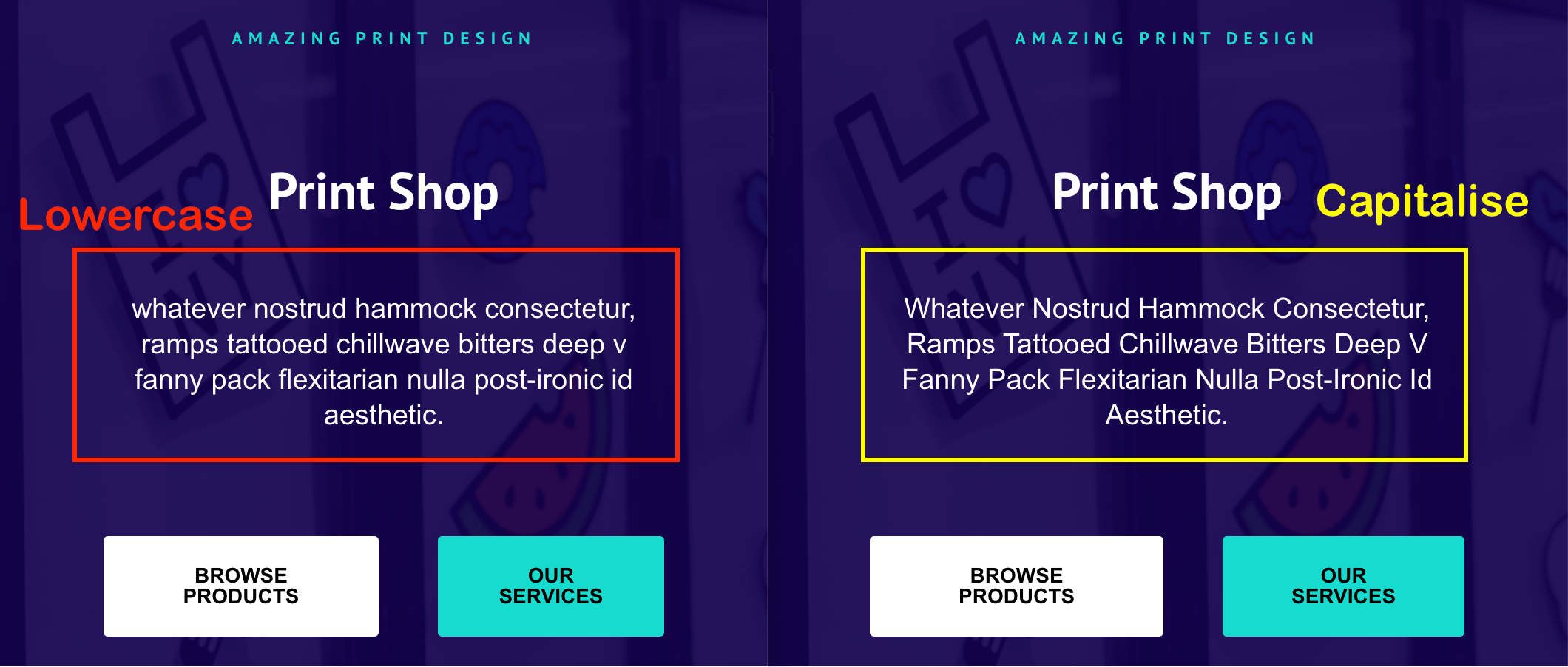
- Text Transform - none | capitalize | lowercase | uppercase.
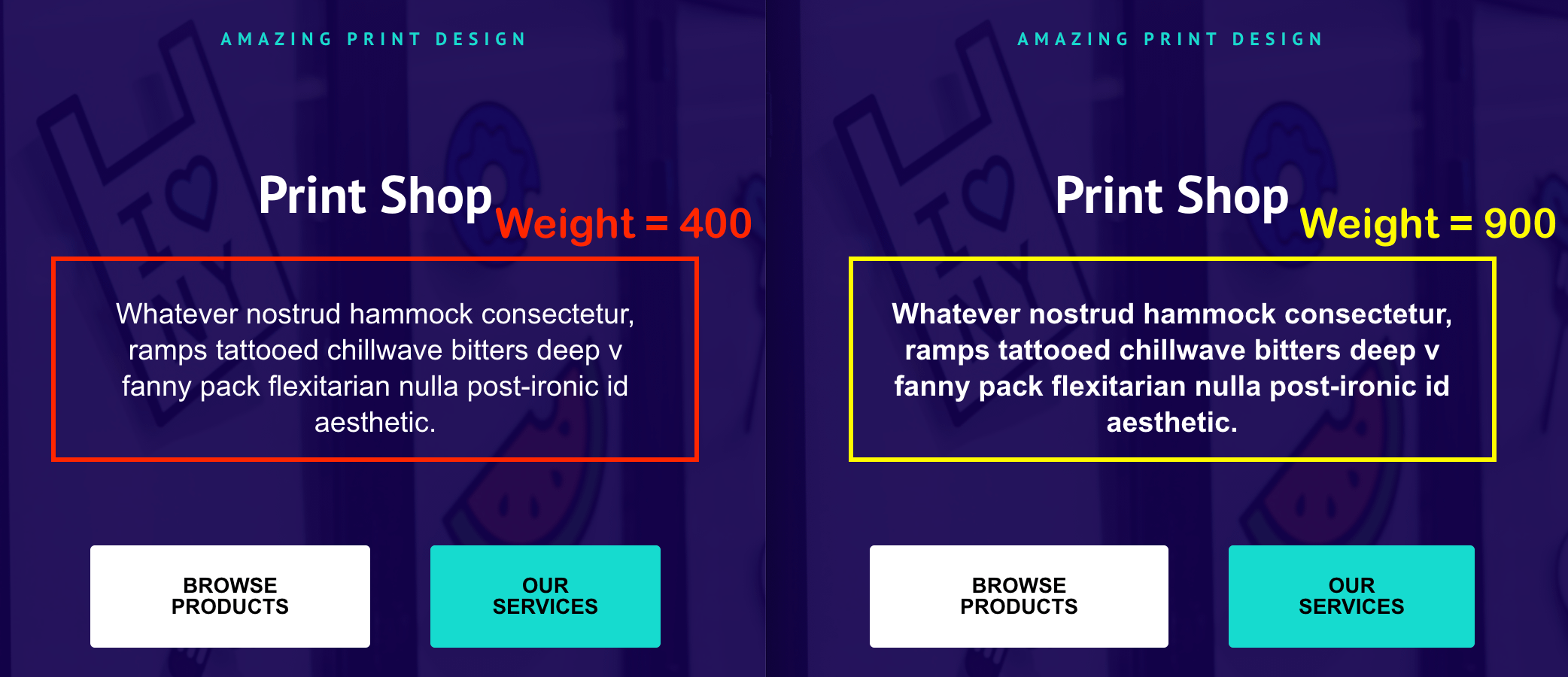
- Weight - none| 100 | 200 | ... | 900.
- Font Size - change the numeric value of the font (PX, EM, REM).
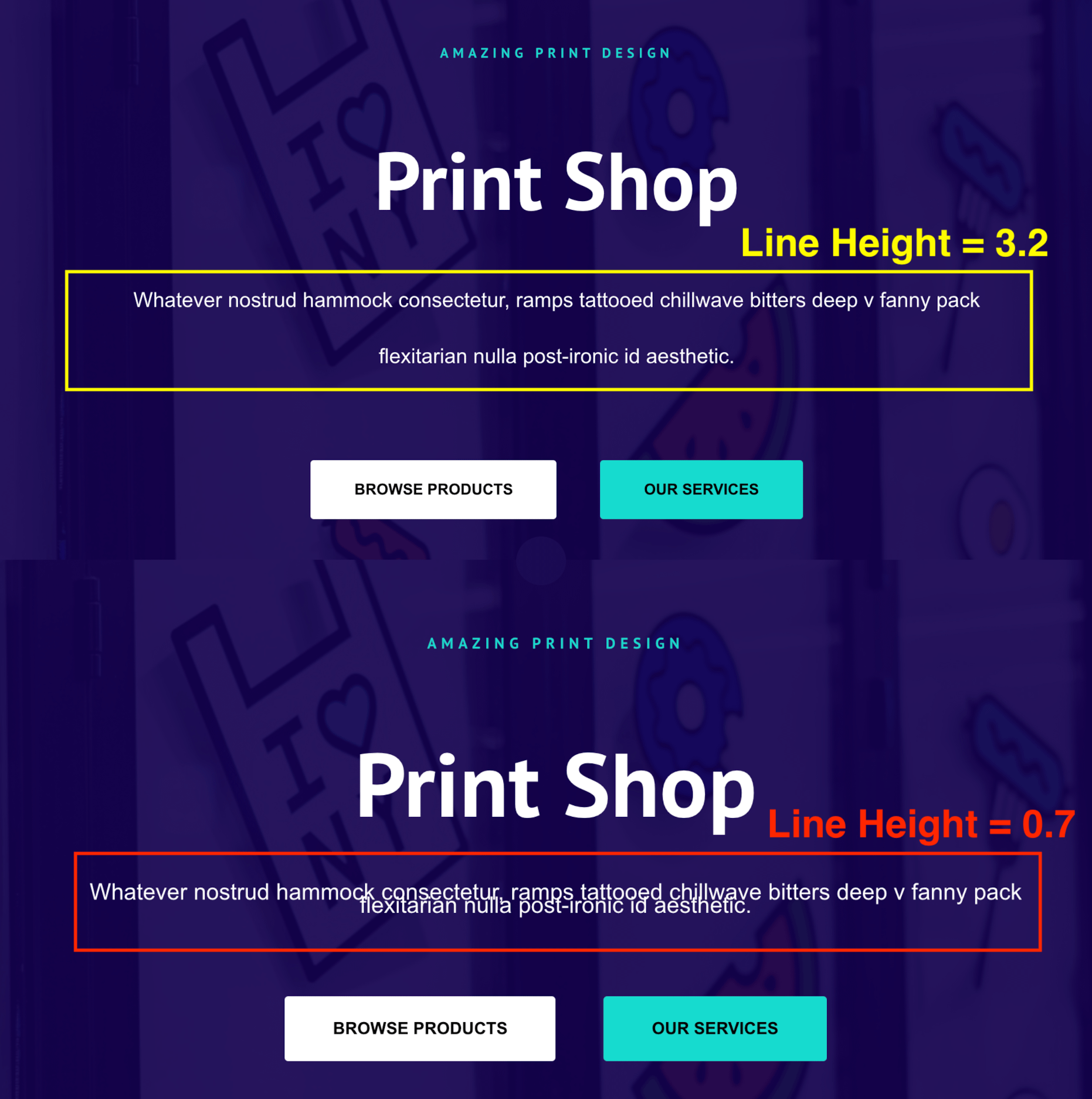
- Line Height - numeric value, represented in EM, PX, or - ( which means that descendent elements that specify a different font size will inherit that number instead of a fixed line-height). The - unit allows relative inheritance, but for elements with custom font sizes — for example, text set through the Block Editor, Elementor, or another page builder — the global line-height may not scale as expected. In those cases, use Appearance > Customize > Additional CSS to add a targeted override for that element.
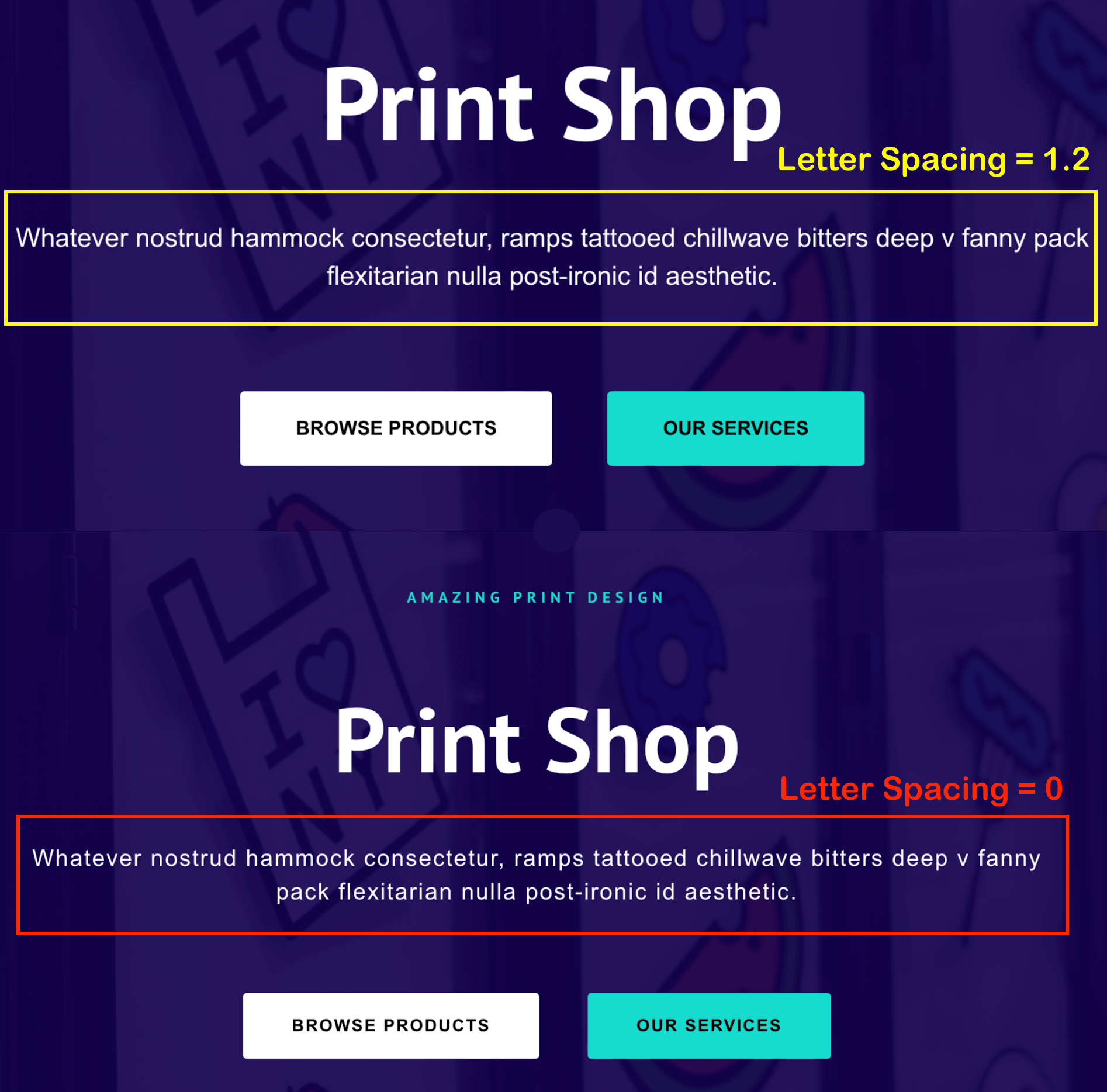
- Letter Spacing - numeric value, represented in pixels.
Each of these last three options is responsive; they can be set differently on Desktop | Tablet | Mobile and reset by clicking on the ↪️ icon.
Headings
In this panel, it is possible to choose a font family for the Headings that differs from the font family set in the General panel. For each tag, the following options are available: text-transform, weight, font size ( in PX, EM, REM) line-height, and letter spacing. You can use the accordions of each heading and customize them accordingly, as you can see in the screenshot below:
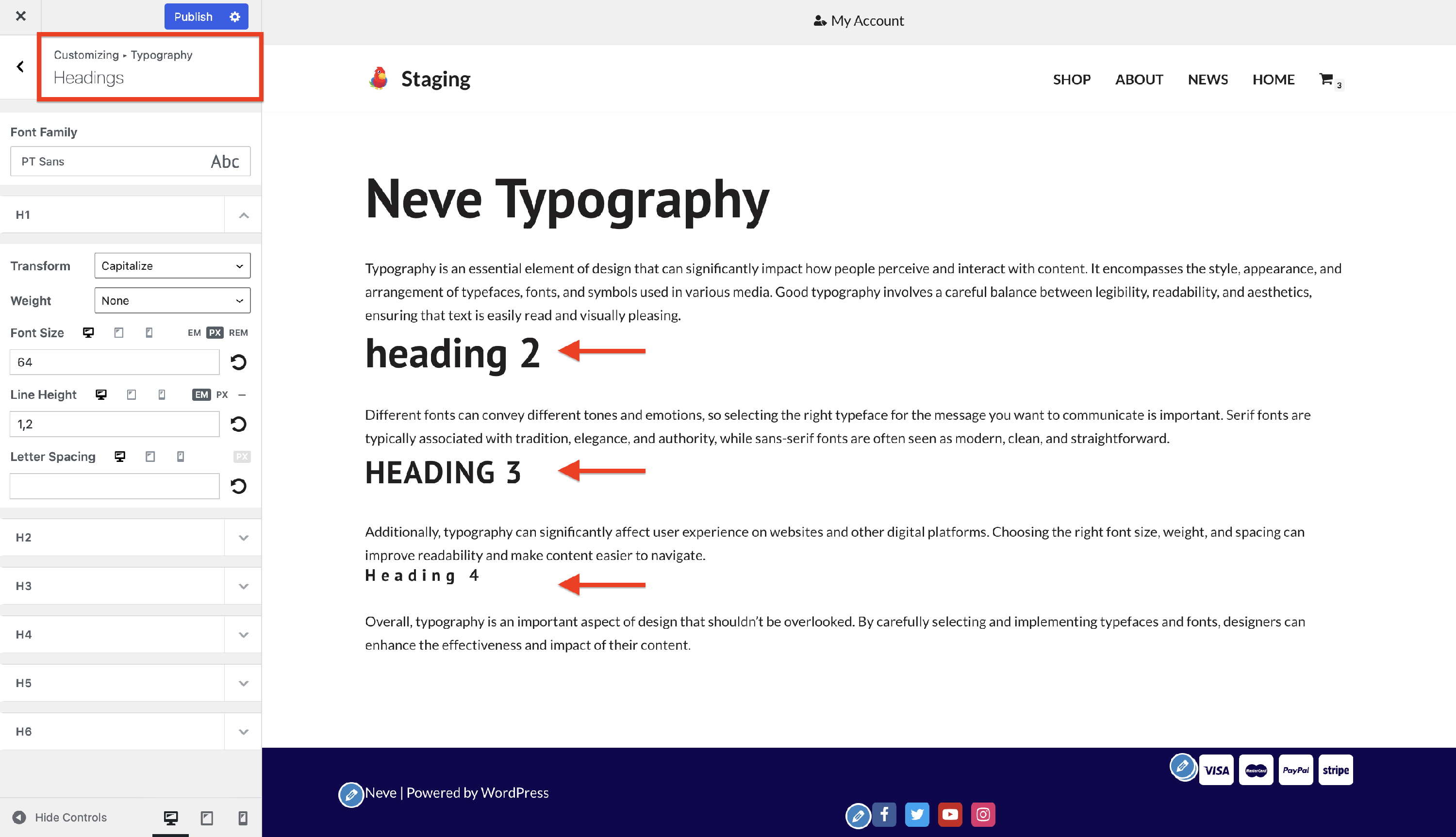
This feature will not impact the CSS code or dynamic style of users who lack override-specific headings.
📝 Note: The fallback font is common with the General fallback.
Changing the page title font size
Standard page titles in Neve use the H1 heading tag. To reduce or increase the font size of a page title, adjust the H1 setting in the Customizer:
- Go to Appearance > Customize > Typography > Headings.
- Open the H1 accordion.
- Adjust the Font Size value. You can set separate sizes for Desktop, Tablet, and Mobile using the responsive controls.
- Click Publish to apply your changes.
📝 Note: If a page title is rendered by a page builder (such as Elementor) or a block with its own typography controls, those settings may override the theme's H1 font size. In that case, adjust the font size directly in the builder or block.
Blog
The blog typography settings apply to the blog/archive page and the single post layout. These controls are located under Customize > Blog > Blog / Archive and Customize > Blog > Single Post (not under the Typography panel). The font-family and fallback font will be inherited from the General and Headings fonts; however, the other settings, such as text transform, weight, font size (PX, EM, REM), line-height, and letter spacing can have different values for the following sections.
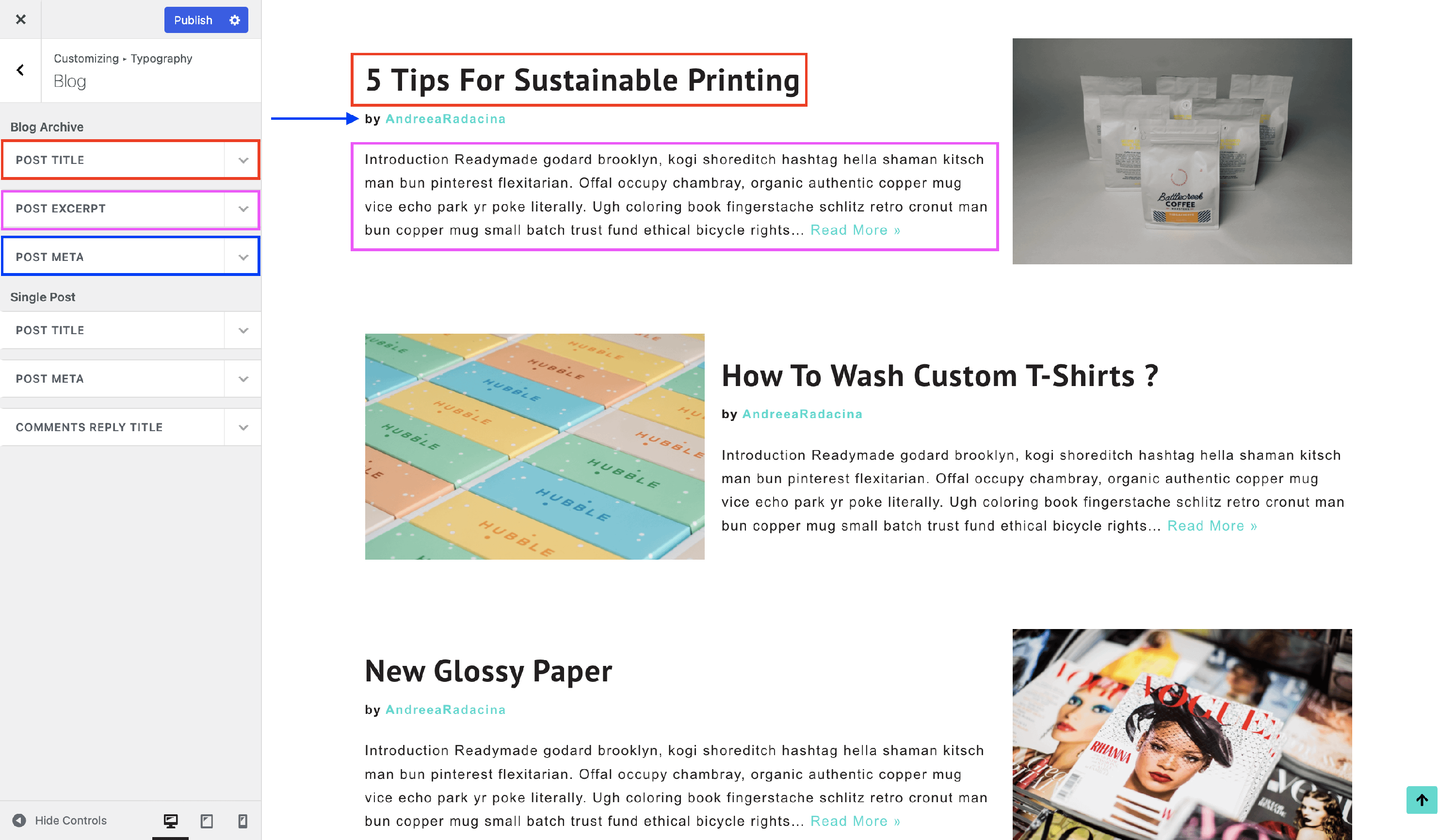
Blog / Archive page
- Post title - an H2 tag; without setting anything here, values will be inherited from Typography > Headings > H2.
- Post excerpt - body text; without setting anything here, values will be inherited from Typography > General.
- Post meta - list item; without setting anything here, values will be inherited from Typography > General.
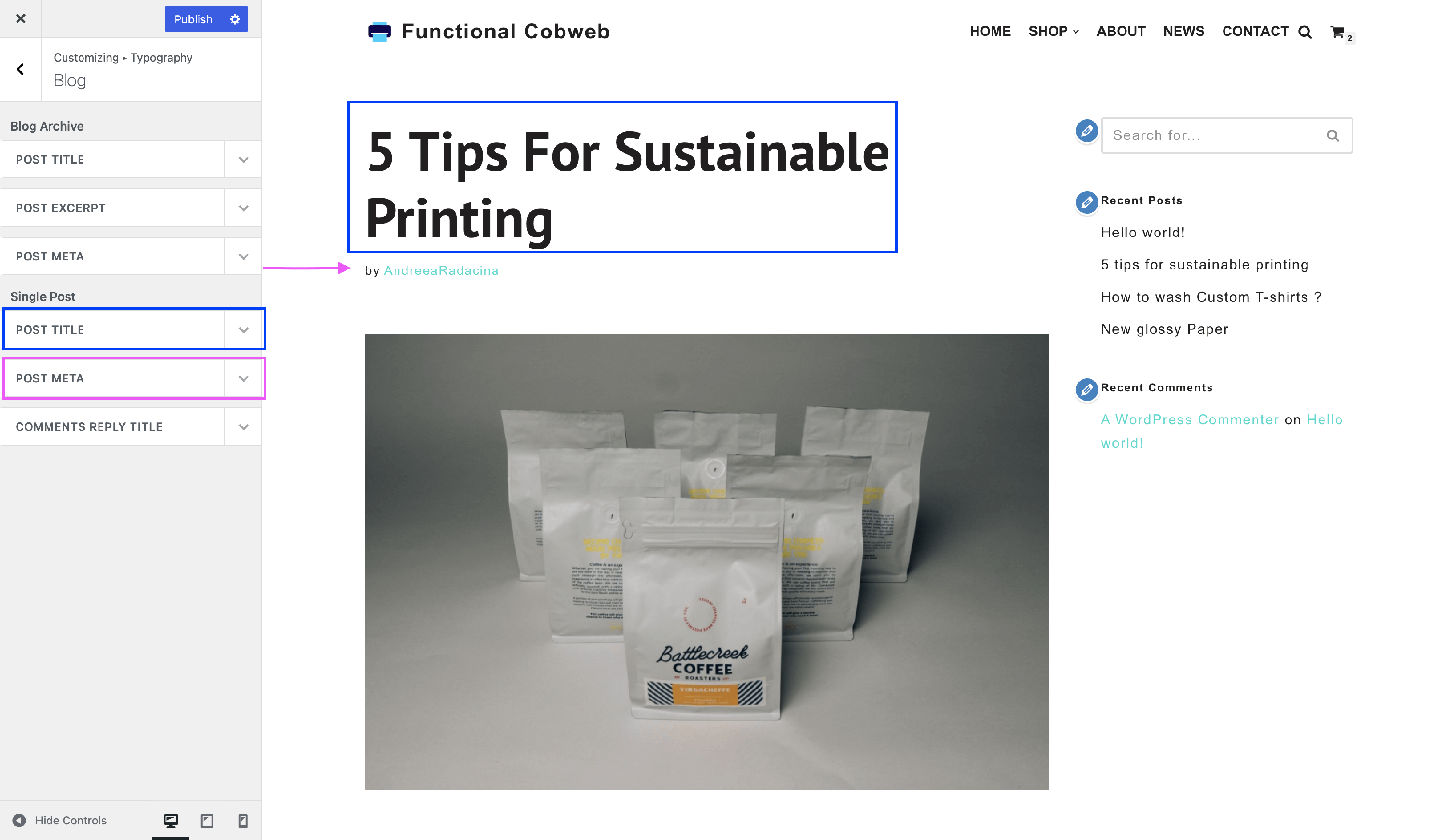
Single Post
- Post Title - is an H1 tag; without setting anything here, values will be inherited from Typography > Headings > H1.
- Post Meta - list item; without setting anything here, values will be inherited from Typography > General.
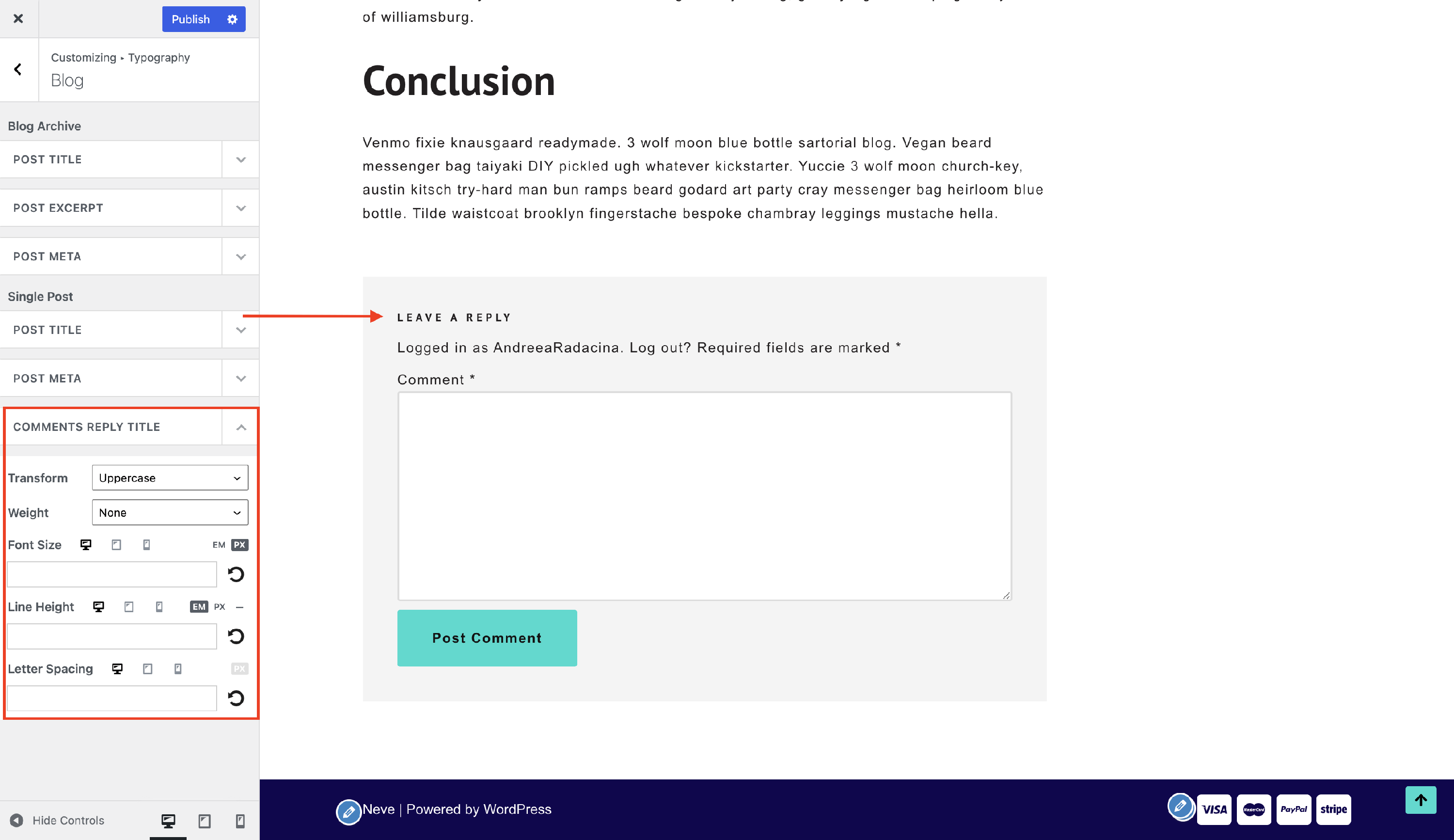
- Comments reply title - an H3 tag; without setting anything here, values will be inherited from Typography > Headings > H3.
WooCommerce
📝 Note: The options presented in this chapter are available only with the WooCommerce Booster module enabled, which is available in Neve Pro Business and Agency.
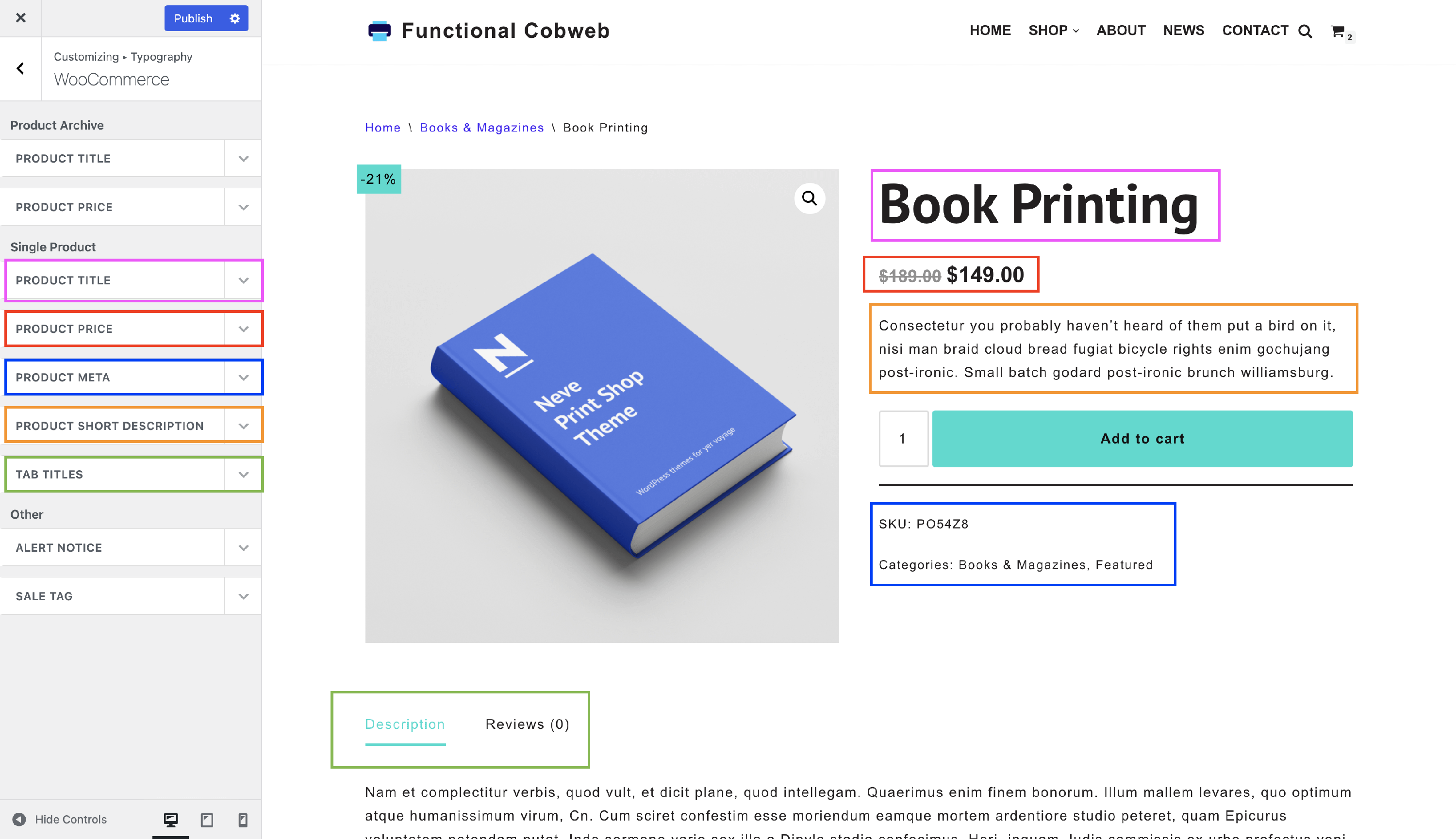
The WooCommerce typography settings apply to the shop/archive page and the single product layout. The font-family and fallback font will be inherited from the General and Headings fonts; however, the other settings, such as text-transform, weight, font-size (PX, EM, REM), line-height, and letter-spacing can have different values for the following sections.
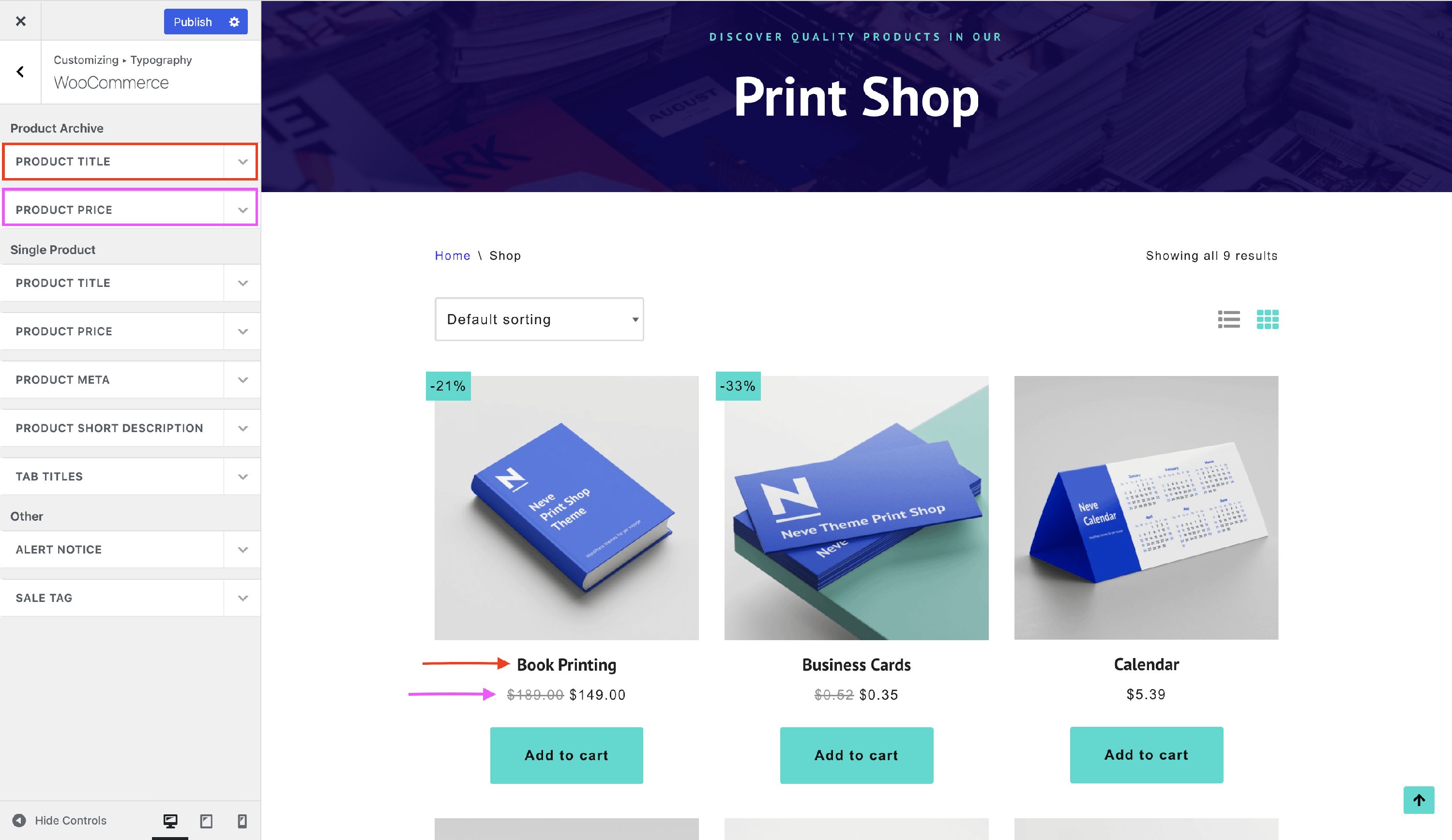
Shop / Products Archive
- Product title - is an H2 tag; without setting anything here, values will be inherited from Typography > Headings > H2.
- Product price - body text; without setting anything here, values will be inherited from Typography > General.
Single Product
- Product title - is an H1 tag; without setting anything here, values will be inherited from Typography > Headings > H1.
- Product price - body text; without setting anything here, values will be inherited from Typography > General.
- Product meta - body text; without setting anything here, values will be inherited from Typography > General.
- Product short description - body text; without setting anything here, values will be inherited from Typography > General.
- Tab titles - list item; without setting anything here, values will be inherited from Typography > General.
Other
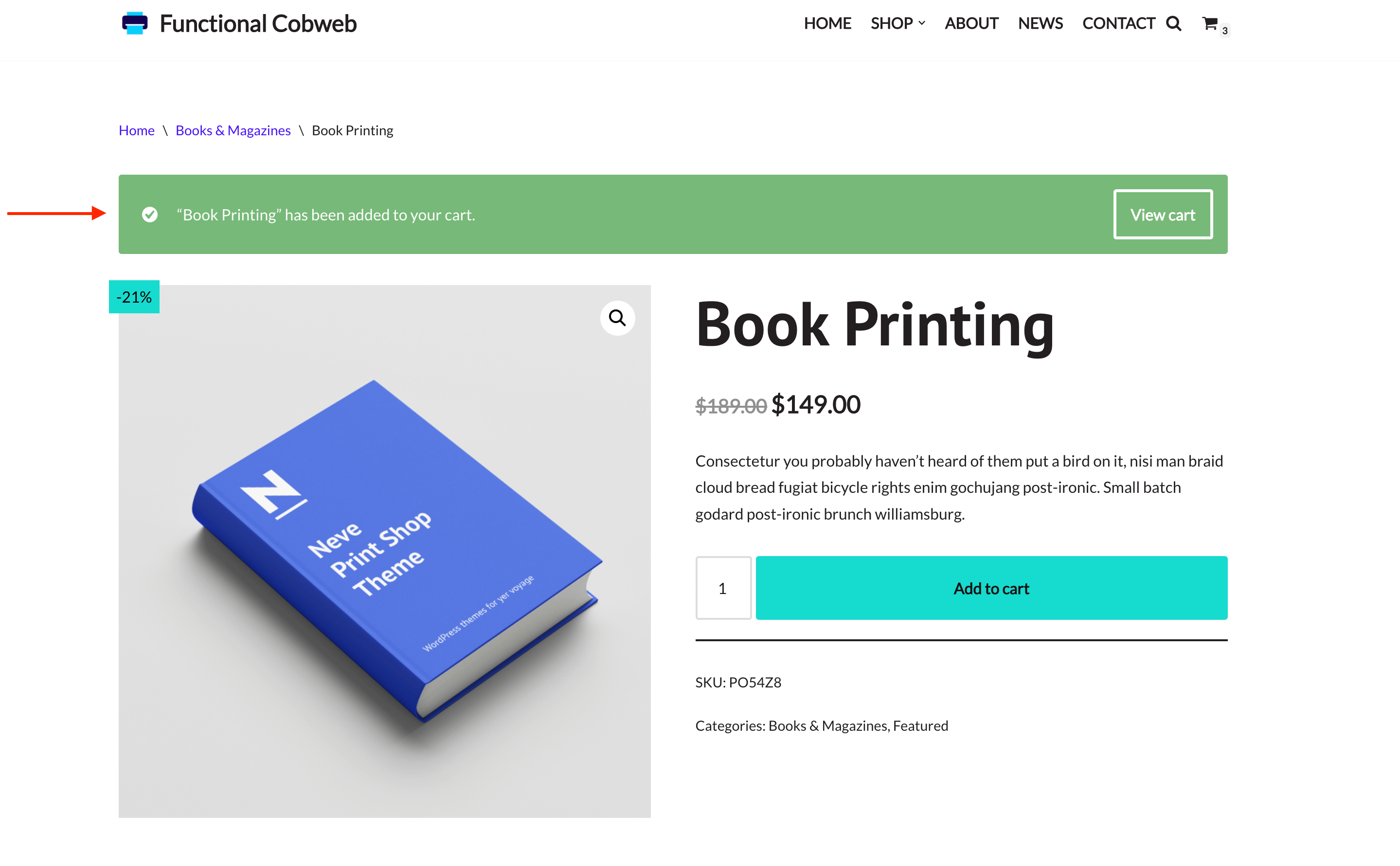
- Alert notice - div tag; without setting anything here, values will be inherited from Typography > General. It appears after a product has been added to the cart.
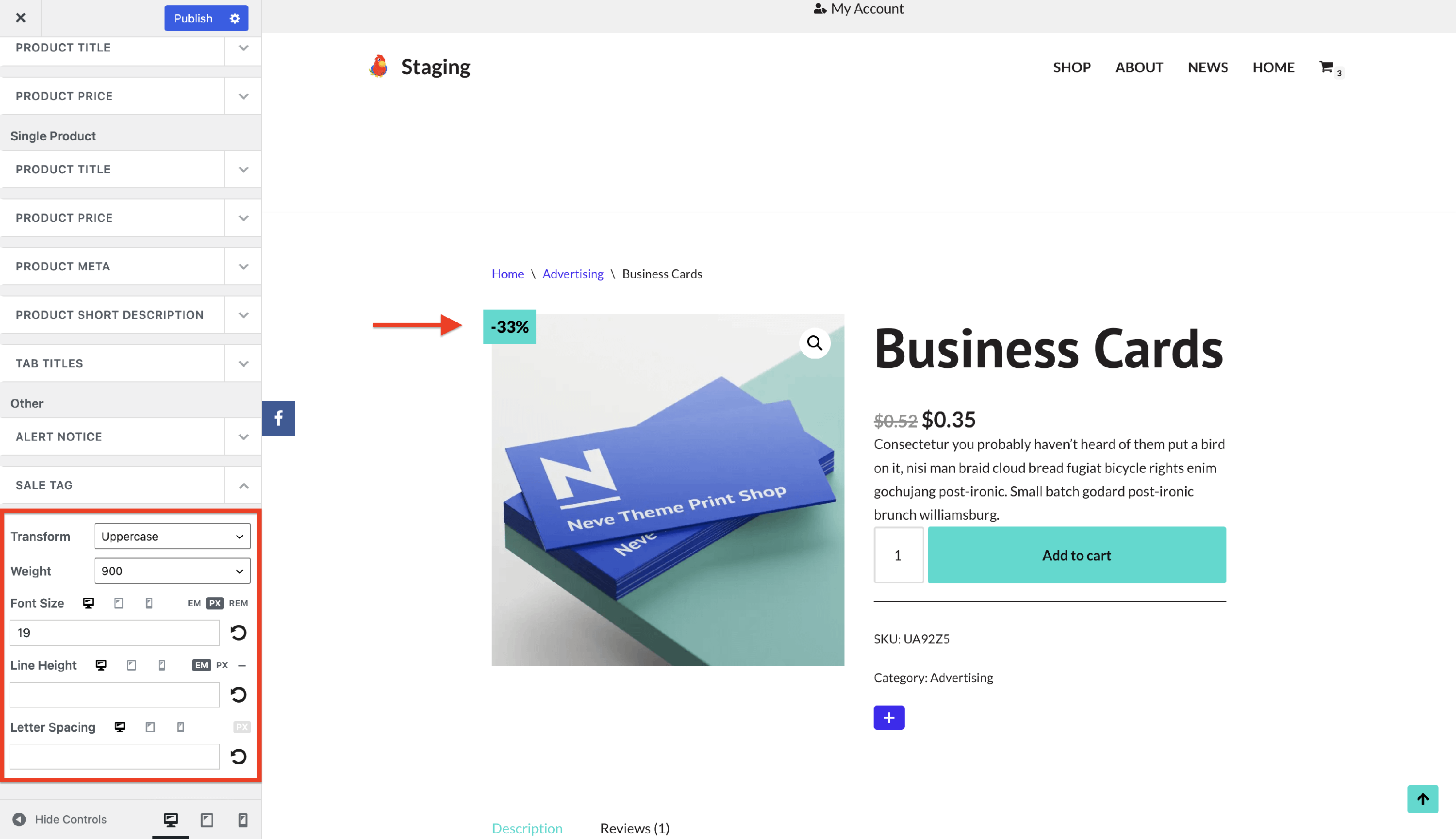
- Sale tag - appears on both the shop page and single product; body text - without setting anything here, values will be inherited from Typography > General.
Easy Digital Downloads
📝 Note: The options presented in this chapter are available only with the Easy Digital Downloads module enabled, which is available in Neve Pro Business and Agency.
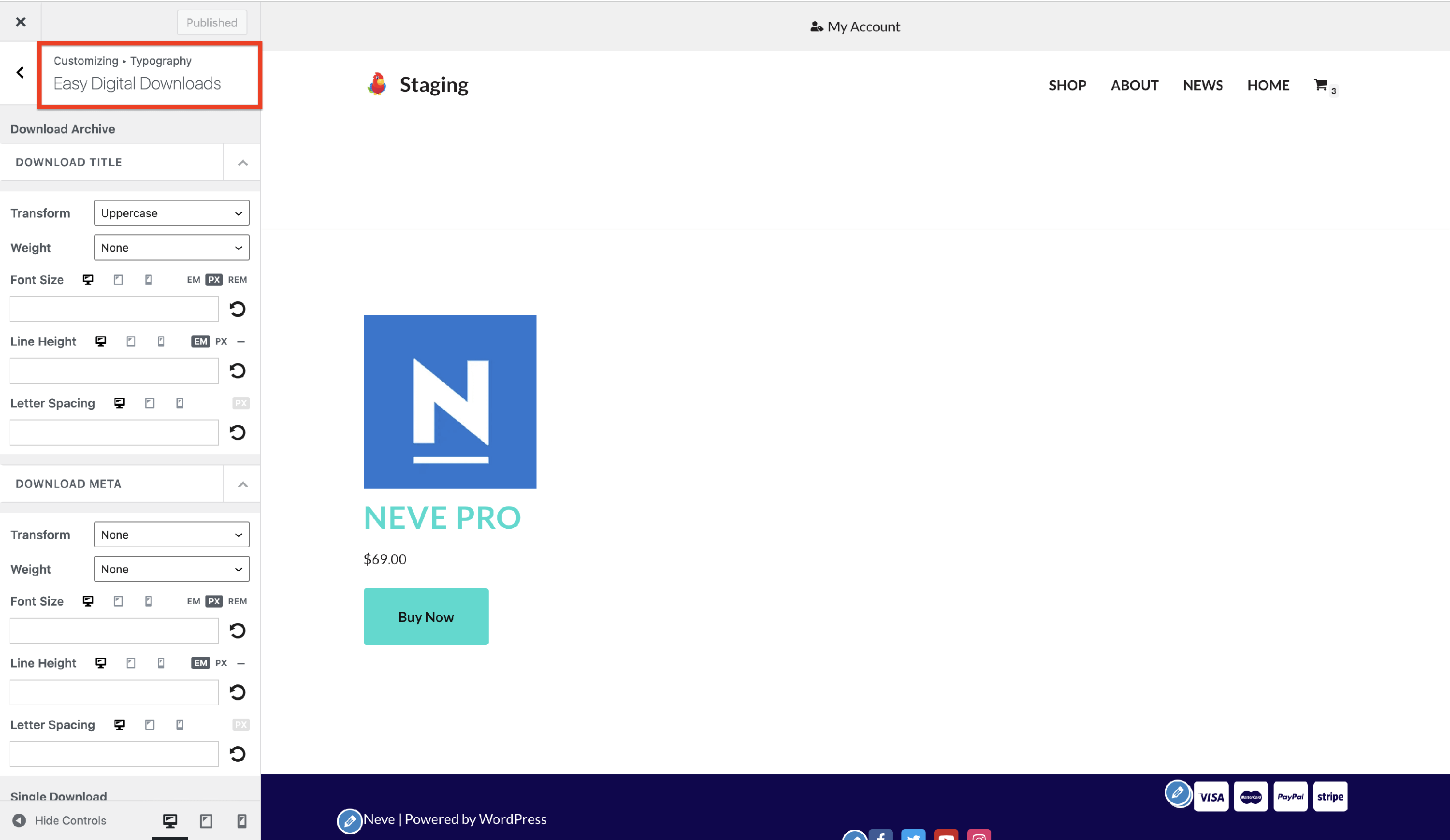
This panel provides customizations for the EDD catalog, with different panels for Download Title, Download Meta for the Download Archive, and also for the Single Downloaded. The available customizations refer to Transform, Weight, Font Size (PX, EM, REM), Line Height, and Letter Spacing.
Menus
Dedicated typography options are available for the header / footer menus while editing the component into the header / footer builder. The menus allow the font-family, text-transform, weight, font size (PX, EM, REM), line height, and letter-spacing properties to be customized.
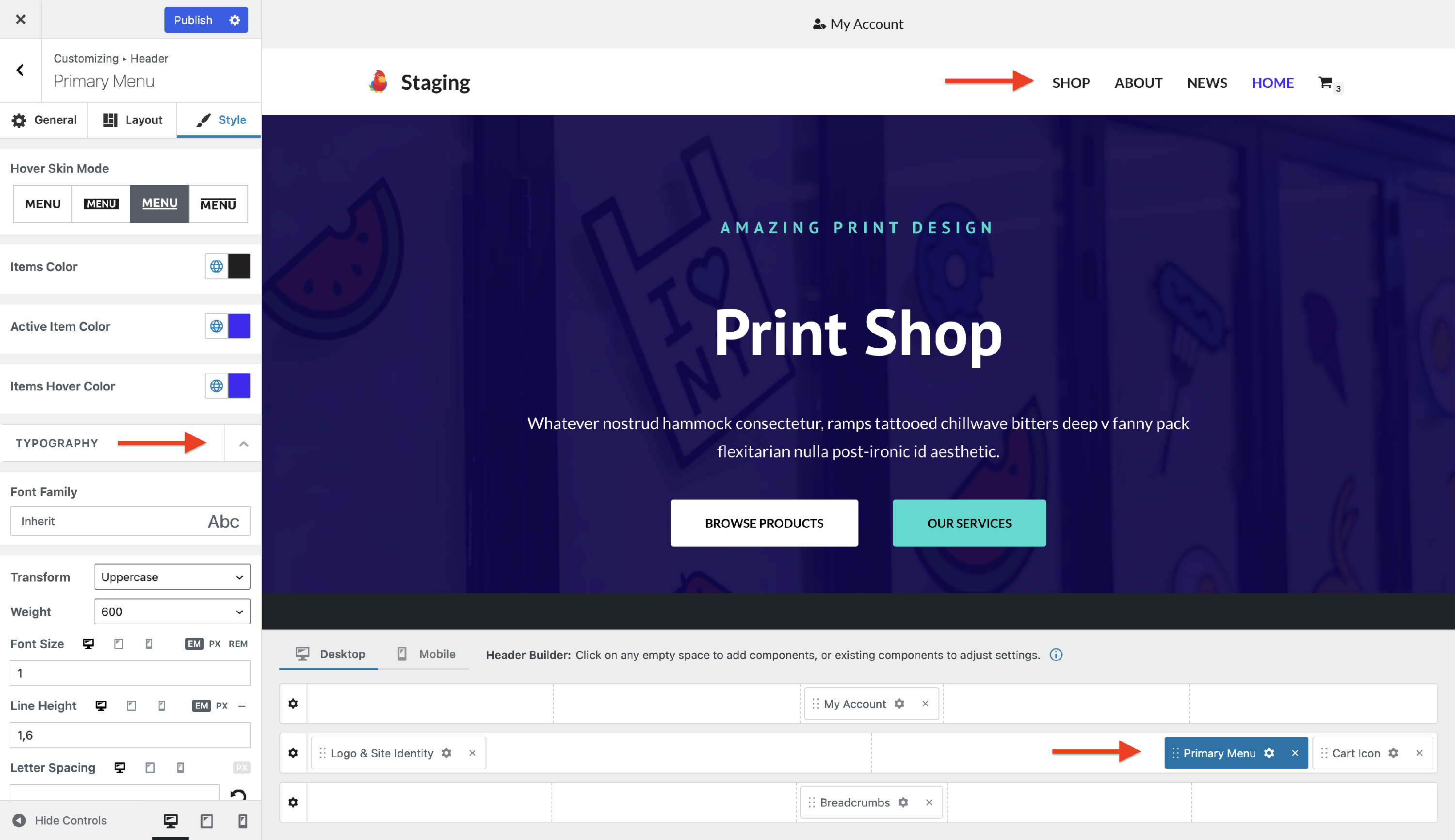
📝 Note: More information about header / footer builder can be found in this category.
Troubleshooting Line Height Issues
Why doesn't my global line-height apply correctly to some elements?
The global line-height set in Customizer > Typography > General applies to all body text by default. However, there are cases where it may not take effect on specific elements:
- Block Editor custom font sizes — When you manually set a font size on a block (e.g., a Paragraph or Heading block) using the Block Editor's typography controls, that block may no longer inherit the theme's global line-height correctly.
- Page builder elements — Elements styled through Elementor, Beaver Builder, or other page builders typically manage their own typography, which can override or ignore the theme's global value.
- Third-party plugins — Some plugins inject elements with inline styles or their own stylesheet rules that take precedence over the global setting.
In these situations, the global value is still applied, but a more specific CSS rule from the block, builder, or plugin overrides it.
How to override line-height for specific elements with CSS
When the global setting is not sufficient, you can add a targeted CSS rule using Appearance > Customize > Additional CSS.
- Identify the CSS class of the element you want to target. You can do this by right-clicking the element in your browser and selecting Inspect.
- Navigate to Appearance > Customize > Additional CSS.
- Add a rule like the following, replacing
.custom-textwith the actual class name:
.custom-text {
    line-height: 1.7 !important;
}
The !important declaration ensures your rule takes precedence over any conflicting styles from blocks or page builders.
💡 Tip: Use unitless values like 1.7 for line-height when possible. A unitless value scales proportionally with the element's own font size, which avoids spacing issues when the font size changes across devices.
For more information on adding CSS overrides, see How to add custom CSS to themes.